Thursday, 25 August 2011

Who do you want to be?

Today is not a good day for me to write here, because I feel I don't have anything good to add. But I have still many questions to ask...

Have you ever thought that what makes you happy might not make others happy? But also, have you noticed that the same things that you think make you happy, might be the same things that make others cry?
When you drink until you pass out, you might think that this night out was great with your friends, but you might not realise that, every time you drink too much, you're just a pain for everybody else at the end of the night. Do you care about others or only your personal delight is important?
When you do that thing you shouldn't because everybody else does, knowing it's wrong, you might not realise that the same attitude might affect you negatively one day back, because this was the example you gave in the first place.Will you have the right to complain, knowing that you did the exact same thing before you were the one negatively affected by that attitude?
When you put your ego before anything and everybody else, what do you gain? 
When you start thinking that it's extremely difficult for you to stop doing what is wrong, because of what other people might think or because of social pressure, what does that make you? 
When you always put yourself as the victim in all circumstances, without ever taking responsibility for your own mistakes, always trying to find someone else to blame, who do you benefit?
When you do everything you possibly can to be liked at any price, because you're a needy person, what do you expect from people in general? 
When you would like people to act in a certain way towards you, but you don't act in this way you like towards people, why would you think that the problem is with them? 
When you don't put yourself in other people's shoes, why do you expect them to do that for you? 
When you want to change things in other people, why don't you ever consider changing things in yourself first? 
When you feel that you want to be like everybody else or to do exactly what everybody else does with their lives, why do you assume that others probably feel or should feel the same way you do?
Have you ever thought about these questions before in your life? 


The French writer Antoine Saint-Exupery told us in The Little Prince book: "You become responsible, forever, for what you have tamed". That's just the truth!

Who do you want to be? Maybe this question is not as difficult to answer as the why you want to...

Peace! 

Mrs. P


I don't need to be anything other than a prison guard's son,
I don't need to be anything other than a specialist's son,
I don't have to be anyone other than the birth of two souls in one,
Part of where I'm going is knowing where I'm coming from,

I don't wanna be anything other than what I've been tryin' to be lately,

All I have to do is think of me and have peace of mind,
I'm tired of looking 'round rooms wonder what I gotta do,
Or who I'm supposed to be,
I don't wanna be anything other than me,

I'm surrounded by liars everywhere I turn,

I'm surrounded by impostors everywhere I turn,
I'm surrounded by identity crisis everywhere I turn,
Am I the only one to notice?
I can't be the only one who's learned,

I don't wanna be anything other than what I've been tryin' to be lately,

All I have to do is think of me and have peace of mind,
I'm tired of looking 'round rooms wonder what I gotta do,
Or who I'm supposed to be,
I don't wanna be anything other than me,

Can I have everyone's attention please?

If you're not like this and that, you're gonna have to leave,
I came from the mountains,
The crust of creation,
My whole situation made from clay to stone,
And now I'm telling everybody,

I don't wanna be anything other than what I've been tryin' to be lately,

All I have to do is think of me and have peace of mind,
I'm tired of looking 'round rooms wonder what I gotta do,
Or who I'm supposed to be.


Wednesday, 27 July 2011

Paul of Tarsus


My favorite apostle is Paul. I think he is the supreme example of someone who had the courage and strong will to change himself. To me, he's someone I can relate to, because he used to be Saul, the proud Doctor of the Law who used to seek and kill Christians because they believed in a leader who he could not understand at the time. But, after becoming Paul, he was the apostle of gentility who changed lives and lived his own life by giving the example first, before telling others how to be or what to do. He was despised by people he loved once and was loved by those who shared his new beliefs and new behaviour, but Paul was always sincere and brave in pursuing what he felt was right.

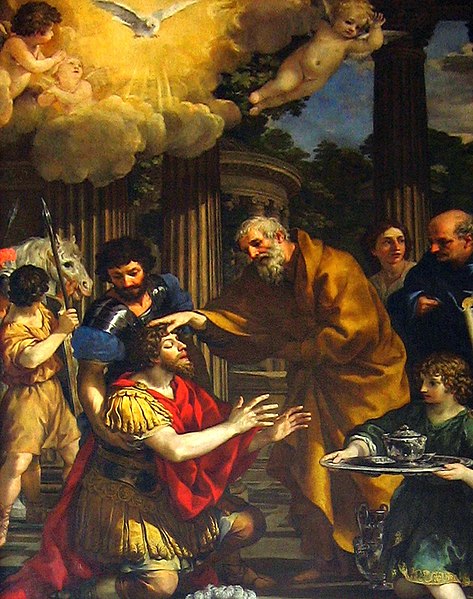
Once he saw Jesus on the way to Damascus, Saul felt Jesus moral superiority and heard Jesus asking: "Saul, Saul, why do you persecute me?" This was enough to make Saul decide to change. This passage of the Bible has a great significance to me, because it makes me think how one experience, one moment of enlightenment can change the course of our entire life for the better, when we decide that is what we want and show courage and strong will to change it. Saul used to be a good man, but intolerant and very proud of being who he was. He decided to use the law of that time, to his favour, to persecute, humiliate and kill Christians, because he could not understand or respect their beliefs. And I think to myself how many "Sauls" still exist nowadays...Aren't we like Saul when we are sarcastic towards people's beliefs? Aren't we like Saul when we try to humiliate and make fun of people for their belief or faith? Aren't we like Saul when we are so proud to be who we are that we think nothing and no one can be better than us and our intelligence? History changes with time, and we might not kill and persecute people for their beliefs as we used to, a long time ago, but we developed other ways to persecute and humiliate people in this respect. Making prejudist jokes and being sarcastic towards people's beliefs (any belief!) is accepted by society. It is also allowed by society that you hide cowardly behind these jokes what you really feel, but you are not allowed, by this same society, to show it openly in other ways of expression (it would be then considered politically incorrect!). Isn't it a bit hypocritical to accept prejudice in the form of comedy as an excuse to vent out your feelings?

The other day, I went to a comedy gig in St Albans where a comedian said: "I love the women who wear Burka because I find them sexy." And the majority of people in the place laughed at his joke. Then, I ask myself if this isn't a typical example of someone hiding cowardly their prejudice behind their jokes. Also, I wonder if people who were laughing at it were not enjoying the fact that someone was being sarcastic towards something they might not agree with or like it... in this case, it would be women wearing Burka. Independently of agreeing or not with the fact that some women wear Burka, what makes us think that it's okay to laugh at a joke like that? 
I am a Christian, but I took offense from this joke and personally didn't think it was funny at all! It is disrespectful and unnecessary... Everybody deserves respect! I have noticed that it is a pattern to see comedians making fun of all religions here. How much more disrespectful and sarcastic will people allow themselves to be in the name of comedy?

When Saul saw Jesus, he asked: "Who are you, Lord?" And Jesus answered: "I am Jesus of Nazareth, whom you are persecuting." And Saul asked: "What shall I do, Lord?" This is an extremely important question. Saul didn't ask why, how, when, where...he simply asked what he should do from that moment on. He felt, in that moment, that Jesus was someone superior to him somehow, even if he couldn't understand completely why, at that moment. He didn't argue or showed stubbornness and pride, because that episode was enough to make that good, but proud man, feel he was following the wrong path. When we feel inside us that we are wrong, I would think that we generally are, even though we don't like admitting it to ourselves and prefer to ignore this feeling inside. Jesus answered Saul saying: "Get up and go into Damascus, and there you will be told everything you are to do." Why can't we get up and decide to do what we are supposed to?

Some people (it includes me) might be asking: but what are we supposed to do? This is one of my favorite passages of the Bible and it was written by Paul, already a Christian and great Apostle by then, and I think it gives us the base to understand what we need to do.

"Though I speak with the tongues of men and of angels, and have not charity I am become as sounding brass, or a tinkling cymbal. And though I have the gift of prophecy and understand all the mysteries and all knowledge; and though I have faith, so that I could remove mountains, and have not charity, I am nothing. And though I bestow all my goods to feed the poor, and though I give my body to be burned, and have not charity, it profit me nothing. Charity suffer long and is kind, charity vaunt not itself, is not puffed up, dot not behave itself unseemly, skeet not her own, is not easily provoked, think no evil, rejoice not in iniquity, but rejoice in the truth; bear all things, believe all things, hope all things, endure all things. And now abide faith, hope, charity, these three; but the greatest of these is charity (Paul, I Corinthians, 13:1-7 & 13).

We shall do charity. This is our answer. Not only the type that raises money to help the ones who need it (although this is very noble). We can also practice charity in the kind way that we treat others. This kind way includes, not only politeness, but the type of kindness that is meaningful and sincere. The kindness that makes others feel warm inside. The kindness that is tolerant, not because of social standards or appearances, but because of a good and sincere heart. The type of kindness that thinks: "Would I like it if I was in this person's shoes and this person did to me what I just did to them?" The type of charity that always thinks that we should do to others only what we would like others to do to us and the ones we love. Charity can be expressed in many ways and it's the greatest of all things. Let's pay close attention to the part which says: "When I was a child, I spoke as a child, I understood as a child, I thought as a child: but when I became a man, I put away childish things." Let's leave our childish ways behind and become grown ups spiritually wise. Let's stop thinking morally like children, and seek to know more about things which really matter and are good, instead of seeking things which are only temporary.

In the Gospel according to Spiritism book, in the chapter 15 called "Without charity, there is no salvation", Allan Kardec comments on this part of the Bible above from the apostle Paul, writing: 

"This is the way in which Saint Paul understood this great truth, which said: 'When I have learned the language of the Angels, when I have the gift of prophecy, which I can penetrate all the mysteries; When I have all the faith that is possible, even to the point of transporting mountains, if l do not have charity, then I am nothing. Within the three virtues: faith, hope and charity, the most superior of these is charity." In this manner and without any possible doubt, Paul places charity above even faith. This is because charity is within the reach of everybody, from the ignorant to the wise person, from rich to poor people; it is also quite independent of any particular beliefs.
He does even more: he defines true charity by showing it as being not only beneficence, but also a collective of all the qualities of the heart, in terms of goodness and benevolence towards all of our fellow beings." 

This is what we need in the world, isn't it? Charity! Let's have it started with us first rather than to wait for others to start practicing charity in every action of everyday... 

There is a book called Paul and Stephen which is my favorite book of all and it talks about the life of Saul while non Christian, and Paul, the apostle. It is a beautiful book and I might talk about it here one day... 
Peace! 

Mrs. P


"Ainda que eu falasse todas as línguas dos homens e a língua dos próprios anjos, se eu não tiver caridade, serei como o bronze que soa e um címbalo que retine; - ainda quando tivesse o dom de profecia, que penetrasse todos os mistérios, e tivesse perfeita ciência de todas as coisas; ainda quando tivesse a fé possível, até o ponto de transportar montanhas, se não tiver caridade, nada sou. - E, quando houver distribuído os meus bens para alimentar os pobres e houvesse entregado meu corpo para ser queimado, se não tivesse caridade, tudo isso de nada me serviria.
A caridade é paciente; é branda e benfazeja; a caridade não é invejosa; não é temerária, nem precipitada; não se enche de orgulho; - não é desdenhosa; não cuida de seus interesses; não se agasta, nem se azeda com coisa alguma; não suspeita mal; não se rejubila com a injustiça, mas se rejubila com a verdade; tudo suporta, tudo crê, tudo espera, tudo sofre. Agora, estas três virtudes: a fé, a esperança e a caridade permanecem; mas, dentre elas, a mais excelente é a caridade (S. PAULO, 1a Epístola aos Coríntios, cap. XIII, vv. 1 a 7 e 13.)


Friday, 15 July 2011

Your book

I was talking about a bucket list with a friend some weeks ago. I noticed that people have some items in common in their lists such as to plant a tree or to write a book...have you noticed that? I often ask myself what I would write in my bucket list nowadays.
I found a list some months ago that I wrote while in my "youth days" ;) It was inside my Gospel according to Spiritism book that used to belong to my mum. It was bought in 1983 and it's extremely old, but I don't want a new one...I love this old book as it is! It reminds me of many prayers I was part of, with my mum, (even though I was made to participate at the time! hahaha) and it's a reminder to me of what is important in my life. This list had things that I already achieved (although they were minority) and things that I haven't achieved yet, but I am still willing to. Unfortunately, I threw that list away...should have kept it. 
When we are younger, we have so much more hope that we will achieve everything we want, compared to the hope left when we are older, and we haven't achieved those things. We truly believe that we are able to conquer the world and nothing else matters when we are young. This is not a negative thing, in my point of view, and I don't think that this way of seeing the world should be crushed...Experience sometimes give us wisdom (if you grow up as a person), but it often comes with lack of hope... I think that my new bucket list would include something along these lines: "to always keep hope that every dream, every wish and every effort I make will not be in vain and that my hope never dies inside me".
I am still not sure of what I would include in my bucket list nowadays, as my perceptions of things changed drastically since, but I think one item would still remain from the old list to my new list: I want to make people around me happy! I would also probably write in it that I really want to change myself for the better before I die... Another item on my list would be to stick to what Erastus said: "It's better to reject ten truths than accept one lie". (A. Kardec, Revista Espírita 8, p. 257, (1861))


I read this message below and thought that, even though some people have "to write a book" as an item in their bucket list, we all write our book everyday, and this message open our eyes to that. So, for those who want to write a book, you can cross that item from your bucket list because you are already writing it... 
I will probably add new items to my bucket list with time and share them with you here...
I dedicate this post to the ones I love and also to the ones I still haven't learned how to love...I want to learn how to love everybody for whom they are someday... And I want to say that, even if I don't say it much and even if I don't show it enough, my love is here with me... to my friends and my family in special...

Peace!

Mrs. P


Your Book


Your life on Earth is the book you are writing...
Each day is a page...
Each hour is a statement of your personality in 
the form of people and situations that reach you.
Do not lose the opportunity to compose an 
odyssey of love around your name.
Good works are phrases of light you address 
to humankind.
In each reply to others, in each gesture towards 
your neighbours, in each manifestation of 
your opinion, you write the history of your 
passage with eternal ink.
In every impression you make on others, the 
book of your treasures stands up.
Death is the great collector of the sparse 
pages of a biography written by yourself 
about the lives surrounding you.
Do not despise the presence of indulgence 
on the way the Lord gave you to cross.
Build up an area of love around your 
own heart, because only love is sufficiently 
wise and strong to teach you how to 
write your individual story as a helpful 
textbook of hope to those following you.
And the book of your life will turn into 
a poem of happiness and a treasure of 
blessings.
By the spirit EMMANUEL 
 

Tuesday, 5 July 2011

Social Sciences


The definition of Social Sciences is the study of human society and of individual relationships in and to society. It's food for thought, but it's very hard to take. Sometimes I ask myself if I'm the only one who is affected by certain behaviour in society to the point that I cannot even read about them without getting angry, sad or frustrated! I gather that we don't have a solution for everything in society, but we fail to put into practice even the things that we have a solution for, if it will not benefit the most powerful (it doesn't matter which kind of power it is, because power is not always linked to money! Think about that!). I am not too keen on studying that, I have to say... 

Power itself is not a problem, but the way it's used by people becomes a problem! We can see that in many different little things almost everyday. How long will it take for human race to realise that having power doesn't make you better than anyone, but it means that you have big moral responsibilities over your shoulders? People who have any kind of power, which can make a difference to some one's life, should use it to help everyone they possibly can. We should not take advantage of it and use it to have personal advantages over others...at the end of the day, we are all made of the same flesh and blood than everyone else, we will die like every mortal and the only thing left that we will have in the Eternal Life is who we are...  

These academic studies of mine about Social Sciences remind me of the third chapter of the Spirits Book, called RETURN FROM THE CORPOREAL TO THE SPIRIT LIFE, pages 112 to 116. There are some questions answered in this book that have everything to do with what will happen to us as individuals after the death of our body and what we will take with us. I think it's very interesting and that is why I am copying these questions here for you, but you can read them for free here The Spirits's Book, chapter III 

The Soul After Death
 
149. What becomes of the soul at the moment of death?'
"It becomes again a spirit; that is to say, it returns into the world of spirits, which it had quit for a short time."
 
150. Does the soul, after death, preserve its individuality?'
"Yes, it never loses its individuality. What would the soul be if it did not preserve it?"

-Does the soul take nothing of this life away with it?
"Nothing but the remembrance of that life and the desire to go to a better world. This remembrance is full of sweetness or of bitterness according to the use it has made of the earthly life it has quit. The more advanced is the degree of the spirits purification, the more clearly does it perceive the futility of all that it has left behind it upon the Earth." 

151. What is to be thought of the opinion that the soul after death returns to the universal whole?
"Does not the mass of spirits, considered in its totality, constitute a whole? Does it not constitute a world? When you are in an assembly you form an integral part of that assembly, and yet you still retain your individuality." 

153. In what sense should we understand Eternal Life?
"It is the life of the spirit that is eternal; that of the body is transitory and fleeting. When the body dies, the soul re-enters the Eternal Life." 

159. What sensation is experienced by the soul at the moment when it recovers its' consciousness in the world of spirits?
"That depends on circumstances. He who has done evil from the love of evil is overwhelmed with shame for his wrong-doing. With the righteous it is very different. His soul seems to be eased of a heavy load, for it does not dread the most searching glance."

Aren't these questions and answers interesting to ponder about?
I personally think that, in life, everything depends on your intentions, because it's clear that everybody makes mistakes. You are not to be responsible for certain things, if you had the best of intentions, but you couldn't do better because of factors that scape your control (unless your intention wasn't to do the best you could in the first place!). But you will be responsible for the things you had control over and didn't want to do better; you were indifferent to them (doing nothing sometimes means doing bad!) or chose to do them knowing that they were not right. Maybe that's why Social Sciences is affecting me so much...to me, it seems that we, as societies around the world, often choose to keep doing what is unreasonable and wrong intentionally and knowingly...
I chose to share this video below with you, not only because I love this song, but also because of it's lyrics...
Peace! 
Mrs. P  
All around me are familiar faces
Worn out places, worn out faces
Bright and early for the daily races
Going nowhere, going nowhere

Their tears are filling up their glasses
No expression, no expression
Hide my head I wanna drown my sorrow
No tomorrow, no tomorrow

And I find it kind of funny, I find it kind of sad
The dreams in which I'm dying are the best I've ever had
I find it hard to tell you, I find it hard to take
When people run in circles its a very, very
Mad world, mad world

Children waiting for the day they feel good
Happy birthday, happy birthday
And I feel the way that every child should
Sit and listen, sit and listen

Went to school and I was very nervous
No one knew me, no one knew me
Hello teacher tell me, what's my lesson?
Look right through me, look right through me

And I find it kind of funny, I find it kind of sad
The dreams in which I'm dying are the best I've ever had
I find it hard to tell you, I find it hard to take
When people run in circles its a very, very
Mad world, mad world, enlarging your world
Mad world 

Monday, 27 June 2011

Moral conflicts

I think we should avoid talking about negative things as much as possible because I believe that words are powerful. But I feel that it's important to talk about feelings if they are bugging us, and feelings can be negative. This week passed by and I felt that it has been difficult for me. I have been in the middle of moral conflicts. I have been asking myself questions that I still haven't found the answers to.
I asked myself if being useful also means doing things that are not exactly in accordance to what you believe in, but that might help someone somehow at the end. Or is it more important to follow whatever you believe in (no matter what!) and not do anything that it's not in accordance to your personal beliefs? Very conflicting.
If something is good, it doesn't matter if it's not exactly how you believe in as long as it can truly help people, but how are we supposed to be sure that we are actually helping anyone? Do people in general even care if there are better ways to do things or they just don't want to change things because it might hurt their personal pride?
I want to do things to be useful, but at the same time, I don't know if I should do things that I don't truly believe in. Won't it feel wrong in my guts to do something in a way that it's not the one that I believe to be the best for me? Institutions and people work in the way that they believe is the right way for them and it might not be bad, but it might not be the best for you personally. But if you don't join them in their effort, even when it's not exactly what you would have chosen for yourself as the best way, will you be useful to anyone at all at the end?
Many times, changes don't happen because of hurt pride and stubbornness...why do people in general and institutions in general tend to think that what they do or what they achieve don't have space for improvement? Sometimes, we don't see certain things that others do and, when they present us with their views, they might actually add something positive, it does not mean any personal attack or any other obscure reason. It doesn't mean that the person or institution was not good enough either, just because the changes were applied. Nothing and nobody is perfect! But the fact that a person or an institution decide to not improve because they fear they might be seen differently (being judged by others as not good enough), or whatever other reason, it's just too sad. Positive changes should always be implemented, even if we would prefer otherwise, because the general well being of people shouldn't be based on personal preferences, but should be based on the true best for everybody in general...obviously the change itself should only be implemented if it's truly better! Institutions, many times, say that they are open to changes, but it seems to be limited to whom they will affect and how. Why is that? 
Sometimes I feel that everything is about competition in this world, but not the good type. The type that wants all the best for yourself and the not so good rest to everybody else... 
I also don't understand the reason why people get so focused in what someone seems to be and not what someone really is...food for thought!
Well, I read this message from the spirit Emmanuel and I think it has everything to do with this post and I apply this message to myself first, to try to see which parts of it can be applied to me as a person (for personal improvement purposes!). I believe everybody can see themselves in every message if they think carefully about their attitudes...it's a good exercise...

Peace! 

Mrs. P


TO KNOW AS HE OUGHT TO KNOW


"The person who thinks he knows something really doesn't  know  as  he ought to know" - Paul (I Corinthians 8:2)

Civilization has always sought to know excessively but had never known what is suitable to know.
Therefore, even now,  the  airplane  bombards,  the  radio  broadcasts messages of falsehood and death, the fuel feeds  the  machinery of aggression.
In the same way, individually, the person only cogitates to  know, and forgets that it is highly recommended to know suitably.
In our activities related to the Gospels, full attention  is  required in order to successfully perform the tasks appointed to us.
Some students of the Gospels  keep  the  revelation  of  the Heavens to impose it to their neighbours, they imagine to  possess  the gift of humbleness for the  sake of  annoying  people, they declare themselves patients and upset their listeners,  they  call  themselves believers and disperse someone else's faith, they  exhibit  titles  of goodness and forget their private little tasks.
These friends in particular are those who sought to know  but  not  as they ought to.
Those who really  devise  situations  spiritually  also  help  without offense, they become themselves better with no injury to others,  they teach with no perturbation. They know as it is suitable  to  know  and have learned to become useful. They use both  silence  and  words,  they locate the evil and the good, they identify  light  and  darkness  and distribute Christ's gifts. They are much informed about the Source  of Eternal Wisdom and are attached to it like the  perfect  lamp  to  the power supply. Failure and triumph on  the  transitory  plane  of  life hardly change their energies.
These have managed to know as they  should  and  use  their  knowledge conveniently.

Emmanuel

Thursday, 16 June 2011

A diploma is not enough


It's interesting when you read several books about the same subject and find out that they complement each other rather than contradict each other. I was reading a chapter called "Blessed are the poor in spirit" from the book Gospel according to Spiritism today and it made me remember the book The Astral City. I already mentioned both books previously in my posts. In my last post, I talked a bit about The Astral City, but there is a specific part of chapter 14 of this book that I remembered when reading chapter 7 of the Gospel according to Spiritism. If you haven't read any of these books, they're Spiritist books and I can explain why one made me think of the other. 

In Astral City, Andre Luiz (the author) is a doctor who had no religious beliefs before the death of his body and was completely unprepared for the spiritual life. When he got to the other side and saw how things work there, he started to realise how certain things are important there and not here, at the same time that some things are important here but not there. His diploma in Medicine didn't mean so much in the spiritual world and what really mattered was his spiritual values and his morals. He wasn't prepared morally to be a doctor in this place he was living in, in the spiritual world. The Governor of the Astral City says something on these lines to Andre Luiz in the book:"For us here, a degree is a mere identification card. The person who receives such a card is given the opportunity to study and cooperate with the Lord in His Divine work on the planet. This principle is applicable to all earthly activities, regardless of their nature or class conventions..." (From the book The Astral City, chapter 14, page 67). He said that to Andre Luiz when he offered to work in the Astral City, because Andre was thinking about practicing Medicine there straight away. 

The Governor also said: "You, my brother, were granted a medical card, and consequently were admitted into the temple of Medicine. However, your line of conduct does not justify my endorsing your present wish. How could I appoint you to treat spirit patients when on Earth you insisted on limiting your professional observations to the physical body?... As you are already aware, a doctor cannot draw the line at diagnosis and terminologies, he must go deeper and scrutinize the innermost recesses of the soul. On Earth, many of your colleagues become true slaves to academic convencionalism because of their professional life. Very few succeed in crossing prejudices. The rare exceptions are scoffed at by society and looked down upon by their colleagues." (From the book The Astral City, chapter 14, page 67). 

The Governor of the Astral City also told him that, even though Andre Luiz didn't attend poor patients who couldn't afford treatment with the intention of really helping them, while on Earth, he attended around 6.000 patients for free. Maybe he did it not caring about them as much as he should have, but from 6.000 people, 15 continuously prayed for him and that counted in his favour in the spiritual world.  From 6.000 people, who were helped by him, only 15 prayed for him!!! So it got me thinking how sad it must be to be in the other side and not receive prayers from people who you love or that you helped, when you need the most, because they might think that you're gone for good and there is no life after death...or they simply think that prayers are a waste of time! How sad is to think that prayers don't matter and how sad it is to not be remembered after the death of our body...It would sadden me to not receive prayers, I think... If you have someone that you love and this person already passed away, try to always pray for them because they will benefit a lot from your prayers. If you don't believe in God, at least remember the ones who went to the other side with love, and they will still feel your love, even if you don't believe they will. Love doesn't die anywhere and it can always benefit the object of our love wherever they are... If anything, please pray for me after I'm gone from this side of life ;)

Then we can see that the Governor explained to Andre Luiz the reason why only having a diploma and knowledge isn't enough in the spiritual world and why he wasn't ready to be a doctor there. It does not mean that we shouldn't study while on Earth or shouldn't acquire scientific knowledge, not at all! It means that only knowledge will not give you everything you need, as many people believe... We value diplomas, titles and scientific knowledge a lot, but fail to acquire spiritual knowledge, faith and morals, which always stay in second plan. 

This is exactly what chapter 7 of the Gospel according to Spiritism talks about. It basically explains what Jesus meant when he said: "Blessed are the poor in spirit: for theirs is the Kingdom of Heaven" (Matthew, 5: 3). It means that Jesus referred to the poor in spirit as being people that are humble; it doesn't have anything to do with people who lack intelligence. We see so many people that feel that they are better than other people because they have the knowledge and a diploma, but forget that they don't need only knowledge to be a good person. Many brilliant minds used their intelligence to do evil. People need to be humble and we need to believe in something greater than ourselves to learn to be truly humble. A person is not humble only because they are not proud or arrogant. A person is truly humble when they can admit that someone is superior to them, either morally or intellectually. Unfortunately, most of people that have the knowledge, do not have the humbleness to admit that there is a God who created all things and who is a Superior being to us...  

I am copying part of chapter 7 from the book "Gospel according to Spiritism" below for you to see how much this chapter complements chapter 14 of the book "The Astral City". If you haven't read The Astral City, try to keep in mind what the Governor said to Andre Luiz as per above and think about it: 

"WHAT SHOULD BE UNDERSTOOD BY THE WORDS 'POOR IN SPIRIT'
 
1. Blessed are the poor in spirit: for theirs is the Kingdom of Heaven (Matthew, 5: 3). 

2. Sceptics have mocked this maxim, as they have mocked many other things they do not understand. By 'the poor in spirit' Jesus did not mean those devoid of intelligence, but the humble, in as much as He said that the Kingdom of Heaven would be for them and not for the prideful.
 
Men of knowledge and imagination, so called by public conviction, generally hold such high opinions of themselves and their superiority that they consider everything divine as being undeserving of their consideration. By concentrating all their attention upon themselves, they are then unable to lift up their eyes to God. This tendency to believe they are superior to everything else very frequently leads them to deny anything which might be above them, even Divinity itself, for fear it might belittle them. Or if they condescend to admit its existence, they then contest one of its most beautiful attributes, that of providential action over things of this world, because they think they alone are sufficient to govern. Taking the intelligence they possess as a measure for universal intelligence, and judging themselves able to understand everything, they are unable to believe in the viability of that which they do not know. They consider their judgement to be law.
 
If they do not admit the existence of the invisible world and of a superhuman power, it is not because it is beyond their capability, but because their pride makes them revolt against the idea of something above which they are unable to place themselves and which would bring them down from the pedestal upon which they like to contemplate. Hence they only have scorn for everything that does not belong to the visible and tangible world. They attribute to themselves such imagination and learning that they cannot believe in things which, according to their way of thinking, are only good for simple people, taking for poor in spirit all who take such matters seriously. 

However, say what they like, they will inevitably be drawn into this invisible world they scoff at, together with everyone else. It is there that their eyes will be opened, so making them realise their errors. Nevertheless, God being just, He cannot receive those who have denied His majesty in the same manner as those who submitted to His laws with humility, nor can He give them equal share.
By saying that the Kingdom of Heaven belongs to the poor in spirit, Jesus teaches that no one will be admitted without simplicity of heart and humility of spirit; that the ignorant person who possesses these qualities will be preferred to the wise person who believes more in himself than in God. In all circumstances Jesus put humility into the category of virtues that bring Man near to God and pride into the category of vices that keep Man away from God. The reason for this is clear, for to be humble is an act of submission to God, whereas pride is a revolt against Him. For Man then, there is far greater value for his future happiness by being poor in spirit, as the world would understand it, and rich in moral qualities." (From the book Gospel according to Spiritism, chapter 7, page 139). 


It makes sense to me to think that life continues and there are also other lives to be lived through reincarnations, otherwise, I don't personally see the fairness in God. I do not believe that people go to hell or heaven after death, as our hell or our heaven is already inside us, depending on who we choose to be. I believe that the spiritual world is made of responsibilities, duties and work, even more than on Earth, but the currency there is not money. The currency is love, good morals, good heart, charity, wisdom, knowledge and God (not necessarily in this order!). I also think that every good deed counts in our favour, when we do them for the right reasons. We need to see beyond the material side of things to really prepare ourselves to the real life which is the spiritual life. Think about that! :) 
I will also leave you with a link to a very interesting article about a Professor who seems to not be afraid of being scoffed at or looked down upon by his colleagues. I respect him for that!  


Professor dares to discuss life after death in his classes


Take care! 


Mrs. P

Saturday, 4 June 2011

The Astral City


Last week, I volunteered to be part of a book stand in the Mind Body Spirit Festival. Great experience! There were many religions, philosophies and beliefs in the same room co-existing peacefully in the same Festival. I haven't seen any exhibitor trying to convince any other exhibitor of their ideas or beliefs (although I heard it happened!). People were friendly and respectful to each other in their fair as far as I could see, and that made me feel good. The amount of British people that participated in this fair surprised me! For some reason, I tend to think that British people are not too interested in the spiritual side of things, but I guess I am wrong and it's good to be wrong about this ;) There were people from other countries as well exhibiting, and the fair, in general, was just great. A British lady came to our book stand speaking amazing Portuguese and I was very impressed!!! There was also another British lady that came to shout at us that we were not Christians because we believe in reincarnation and mediumship!! I guess that it's not surprising, but that didn't impress me at all! :P It's kind of funny to think that people really believe that they can tell you who you believe in, or who you do not, who can be called Christians and who cannot! I believe some people went to this fair with the sole purpose of disrespecting whoever doesn't think like them (is it really the example that Christians are supposed to give?), unfortunately, but I suppose they are minority. There was also a Tai Chi Chuan presentation that I loved! I've never seen such a beautiful presentation by a Master in Tai Chi! Everything was very spiritual and I felt home :)

Many times I referred to Spiritism as my religion, but it's not the correct definition of it. "Spiritism is a science which deals with the nature, origin and destiny of Spirits, as well as their relationship with the corporeal world." Allan Kardec (Taken from Qu'est-ce que le Spiritisme? - Préambule). I said many times that Spiritism is my religion because it's the philosophy that I believe in and connects me to God, but it has to be studied as a Scientific subject to be understood in depth. The principles in Spiritism were based in observations and researches made by Allan Kardec. In this fair, we had books to sell that were part of the Codification and books written by automatic writing by mediums such as Chico Xavier, for example. This book stand was to sell books that would help BUSS and spread the word about Spiritism for those who had the interest to stop by our stand. One of the books we had there in our book stand was The Astral City. I love this book and I feel that it's a great book to give us an idea of life in the spiritual world. I said some posts ago that I would talk about this book one day here, and I think that this day has come :)

This is the first book of a series by the spirit Andre Luiz who used to be a doctor on Earth and writes about his spiritual experiences after the death of his body. Some people like the book, but don't believe the story is real, some people think it's too heavy and don't want to face the possibility of this book being a real story. I guess we will all find out the truth after we pass away, but wouldn't it be advisable to give it a thought before going through this experience ourselves? 
This book makes me cry every time I read it and makes me think a lot too! It makes me think about things like: Am I wasting my time worrying about things that don't hold real value? Am I doing enough for the good of others? Am I being faithful to the spiritual values that I hold inside me in my everyday actions? Probably not, but at least I am thinking about them and this is the first step to achieve these things. We should all be grateful that we have news from the other side alerting us to the spiritual life, instead of wasting our time being so skeptical because, whether we like it or not, agree with it or not, believe in it or not, we will all die one day and live to the eternal life. Thinking about spiritual life is not being morbid, it's dealing with a certain future (the only certainty we have in life is knowing that death is inevitable). Don't we all plan our future when we are sixteen years old, thinking about which profession to choose and which kind of life to carry? We don't know what the future will bring us, but we all think about it anyway.

You can read The Astral City on this website for free  O Consolador- The Astral City
Remember that this is a real story and it could happen with any of us, although each of us is different and have different paths to walk and different baggage. It doesn't mean that you will go through the same struggles that the author of this book went through, but it will give you an idea of how many things we do that are acceptable by society, but these things can get us into trouble in the other side of life. This book can make you feel uncomfortable, let's say, from time to time, because it will tell you things that you possibly would rather not hear (some people might have difficulties facing the truth) and it might make you feel overwhelmed by the responsibilities we hold while incarnated (usually we don't pay too much attention to spiritual responsibilities at all). But it will also give you hope and give you an opportunity to ponder about what is really important in life and what is not. It will make you see that the time for changing behaviours and habits for better is now and that's why this book is so dear to my heart... 

My friend, if you're reading this, take a minute of your life to think seriously about what you seek in life and if it is really worth seeking. I will end this post with a dialogue from the film Contact that I love.
Drumlin: "Helen, I know that you must think this is all really unfair, maybe this is an understatement. What you don't know is that I agree. I wish the world was a place where fair was the bottom line, where your idealism and your dreams were rewarded, not taken advantage of. Unfortunately, we don't live in that world."
Helen: "Funny, huh? I've always believed that the world is what we make of it".


Peace! 

Mrs. P

Tuesday, 24 May 2011

Social Network and employers


Today I was reading some tweets from a friend of mine that caught my attention. The tweets were talking about how much social networks are more and more part of your curriculum vitae for future employers, because they are accessing them more and more to find out more about you. A tweet also said that, if a job offer is withdrawn because the future employer saw your Facebook, for example, it's your fault, not theirs.
Although I can see that only knowledge isn't enough nowadays, moral also is (or at least it should be), I cannot understand how future employers can base their opinion in what they read in an "about me" or a picture they see on someones Facebook, for example. How can future employers judge someone based on these things to give them a job or not? Is it fair or sensible? Are those people being truthful in the network? Can they know whether they really are, or are not, this or that way by looking at a network profile? These are questions I asked myself.
It seems to me that people can say everything you want to hear and write everything you would expect them to, just to get what they want, but not because of whom they really are. Everybody nowadays knows that internet can make you or break you, let's say. Maybe that candidate who seems to be great for the job copied something from someone else's work, article or profile on internet, and put in theirs, just because they thought it would take them somewhere, not because they necessarily agreed with it. What about people that are being honest and showing themselves as they really are, but seem less than perfect in the social network, for example? Are they to be in disadvantage compared to the ones that chose to deceive? How can a future employer know who they really are based on internet?
With globalization, people from different cultures live and work in different countries. How can the future employer disregard cultural differences? Maybe what would be tolerated in one country, would be an offense in another. The future employees, who were not born in the country they're currently working in, might not always be familiar with certain "work rules" in that particular country. This takes time to get used to, and maybe, the future employee will never be able to get used to certain things. For example, I was told once that it is an offense to call a manager by his name instead of by his nickname, if this is the way they prefer to be called, here in England. In Brazil, it doesn't make any difference at all if you call someone by their name or nickname, even if they prefer nicknames, and it would be viewed as totally acceptable. In England, for example, drinking beer during lunch breaks is normal and accepted, but it wouldn't be seen as professional and acceptable in Brazil, for example. Can you really say that British people are not professional because they drink alcohol during lunch breaks and people from Brazil are professional because they don't? No, you can't. Let's say that a British citizen tweeted that they were going to have a pint with their colleagues at lunch break in a sunny day. Would future employers from different countries dismiss this person's application because of that? Should they?
It seems to me that future employers using the internet to choose their candidates can lead to discrimination. This is something that our laws combat so much and it seems that it could be  accepted, if it involves internet. And, in this scenario, it seems that future employers will have the right to say that it is the applicants fault, not theirs. So, who is to prove that a future employer is discriminating someone by what they have in their profile, for example, religion, interests and etc? How can anyone prove that they weren't chosen by a future employer because they have a criminal record and this information is available on a social network, for example? How can anyone prove that they weren't chosen by a company because they wrote about their religious views and it's not the same religious views of their future superiors who are about to hire someone? I don't think anyone can prove it. But should we start writing about or putting pictures of things we think others will approve of, or write about and put deceitful pictures of whatever we want to? Wasn't it the point of social networks when they came up: to allow people to be virtually spontaneous and socialize via internet? Is this point starting to be distorted now?
People make mistakes. Everyone does. If someone was very young and put a picture on internet that was less than nice, why should this individual "pay"for that, by not getting that vacancy they wanted, later on when they are mature? If an individual wrote something in the heat of the moment that seems a bit unpleasant, why should this individual "pay" for that professionally? Does it mean that these people are not good people or good employees? Maybe they are not, but maybe they just made a mistake, but are essentially good people and will make great employees. The fact that we cannot tell if it was a simple mistake, or if the person doesn't  strike us as being how we would like them to be professionally, is enough to make the "internet recruitment process" unfair.
All of this makes me think that future employers should be like a jury that is asked to disregard some information in a trial, if this information is not accepted by the court as being valid "evidence". The evidence would be the social network information and future employers would be the jury (if you're a lawyer, pardon me if my metaphor is not too good!). It does feel to me like we can potentially be judged and be "convicted" or not by future employers for our internet personal content. The sentence would be to not get the job you wanted because of social network content. Everybody has the right to a fair trial, right? Even the criminal who was convicted for a crime that they committed in real life will need to work to survive someday, in the real world, so maybe we should ask ourselves whether it's acceptable that future employers can dismiss anyone's application based on what we seem to be on a social network.
I might be seen as trouble to many future employers because I write and I say exactly what I think. Many of them don't like that in an employee, although, by law, they cannot give it as a reason for not choosing me. But I believe that everybody should be totally honest about who they are, we shouldn't be forced to being robotic or paranoid about what people might think about us, without knowing us. It doesn't make me less than a team player or a reliable employee to be outspoken, direct and strong willed. It doesn't mean I can't follow leads either. Thinking out of the box and being upfront about it is a great personality trait to have, in my opinion, but in my personal experience, it hasn't been always appreciated in the professional world. We are free human beings and future employers should cherish our differences, not try to make it harder for anyone to get a job because they are not exactly the way they wanted us to be on the internet. Kids might write silly things that are rebellious to impress their mates, once upon a time, but they shouldn't be punished for that after they grow out of it, for example. The young ones, in particular, can be in disadvantage just for once being young and immature, like everybody else once was. People can be so different on internet, because they choose to be a character, many times, and not because of who they really are...this can be really tricky. They might create this character on internet, who doesn't share their real beliefs, tendencies and personality, because they want to be that character, but are not. Or maybe they just want to convince people they are that character to gain something from it. It seems that it can be better to be whom you really are, but use a pseudonym to avoid being judged, than to pretend to be something you are not and use your real name. What does that mean? How can you know that what I wrote here is what I really mean? You can only tell if I mean what I wrote if you know me. If you don't know me, don't judge me. 
In order to have a better society, we have to try to be understanding, even when the situation involves money. People can be extremely competitive or unreasonable when it's about financial matters, positions, status, appearances! There is that popular saying which makes total sense: "Appearances deceive us".
I think that the video below is interesting... especially because of the final question that appears on the screen. I don't know if the information in this video is correct or up to date, but it does make you think.

Peace!

Mrs. P


Thursday, 19 May 2011

Balance

I was thinking today about Science and God. I am constantly thinking about both. I want to be able to understand both and, at the same time, understand the reason why people in general do not consider both subjects equally important to our evolution as moral human beings.
I went to a Science event the other day. It was very interesting, but I could observe certain behaviours that, quite frankly, disappointed me a bit. Sometimes, I have the impression that scientists, in general, seem to think that, by knowing more about Science, they are better human beings than the ones who don't. It also made me think that many religious leaders might think that, by believing in God and knowing more about Him, they are better human beings than the ones who don't. This shows us how we are far away from being perfect. Where is the balance to be found in human nature?
Scientists seem to often regard people who believe in God or are religious as stupid, uneducated, weak minded or delusional. They don't say it as being what they think, because this wouldn't be accepted by society, and they might be regarded as prejudists. In the Academic World, being considered prejudist is synonym of ignorance, as far as I am concerned, and no scientist would like to be seen as such, I am sure. So, instead of saying it as they think, they make jokes, because this is accepted by society. That was the disappointing bit for me. If scientists are so certain that Science alone is the only way to get answers from, why do they feel the need to humiliate religious people and their faith in the form of jokes? Not direct jokes, not to any particular faith or particular person, but in general. Is it to masquerade their despise for religion and make it sound very plausible and funny? This event wasn't offensive to me at all, because I didn't feel the need to be offended by it (it was rather interesting, actually, to observe this behaviour that I didn't expect, being disclosed by scientists), but gave me an insight to something I was rather surprised to find.
I couldn't help it but compare this Science event to the Divaldo Franco's lecture that I've been to, days before, which was essentially religious. Divaldo never attacked Science, quite the opposite, he used of Scientific information in his lecture many times. He never made fun of Science, on the contrary, he respected Science. I just wonder why Scientists could not do the same in regards to religious matters...
To be honest, I don't know why scientists need to mention religion at all in their events...isn't religion a delusion in their point of view? So why was it used as a way of making some of their points in this event? Things like "the world will not end, morons" was used in the event, implying that certain religious people who believe in the end of the world are morons; and a song played backwards mentioning Satan (which can be a sacrilege for many religious people) was part of this event (at this part, I must confess that I was imagining how truly shocked a religious fanatic would be by listening to something that mentioned Satan and 666!). I know that those scientists were trying to make a point by using these methods, but my question is: why did they use methods that could be associated to religion to make their point? Not only to make their point, but also to ridicule religion itself. I noticed all of this because I am a spiritual person, and I am also into Science (believe me, it is not that uncommon!), but these points might have been missed (intentionally or not) by the majority of people there. I didn't go to a Science event to hear scientists making fun of religion (even if it was indirectly), I went there to listen to them talk about Science. As much as I didn't go to Divaldo Franco's lecture to listen to something negative about Science, like (this is a hypothetical situation!!) if he told us to not want to know more about Science because it's not from God (which he didn't do at all, let's make it very clear!)
There is a young British scientist who I admire for making Physics an interesting and understandable subject for the mass. I think that what he is doing is brilliant. His name is Brian Cox. His contribution in this event was the best, in my point of view. He mentioned something that really caught my attention. He explained something and showed us a formula. The formula had a H in it, which is for helium, if I remember well, but the helium hasn't been discovered yet to be part of that formula. I understood that the helium was thought to be part of that equation, but it hasn't been proved by Science yet, although they are almost sure that they will be able to prove it soon. At that point I thought: Why can Science accept the possibility that they might be wrong about an element being part of a formula, but say no to the possibility that they might be wrong about the existence of God? After all, they were not able to prove that this element is part of that equation yet, as much as they are not able to prove, scientifically, that God does or does not exist...interesting, isn't it? I have a friend (a dear one) called Raul Teixeira who is, at the same time, a religious person and lecturer, a medium, a Physicist and a Professor who teaches Physics in a Federal University in Brazil. Isn't it an example of balance?
I think that we all need to find balance in life to achieve best results in everything, and it's not something easily done. Being an extremely intelligent scientist doesn't make you an example of a good hearted human being with great morals, as much as being a religious person doesn't make you stupid, weak minded, delusional or uneducated. Being a religious person doesn't make you kinder or better in anyway than an atheist either! It's not how much you know about Science or how much you believe in God that makes you better than anyone. Let's ponder about what the thought of being better than others, for whatever reason, does instead!!!

Nobody ever doubted that Beethoven was still a brilliant composer and musician even after he became completely deaf. Although he didn't have his hearing, which it's essential for a musician, nobody ever thought that his works were not his, because he couldn't hear, or he wasn't as much of a genius after his hearing loss. He was a genius while he could hear and he continued being a genius after losing his hearing. It shows me that we don't need only our material senses to be able to accomplish goals. We also need our soul to continue to accomplish them, because only a soul keeps what is truly ours...
This is my favorite song of his composition. One day, I will be playing it myself ;) 

Take care!

Mrs. P 


Saturday, 14 May 2011

It's not always easy to put things into practice

I went to Divaldo Franco's lecture on Tuesday in London. It was great! I was feeling in peace, but that same day I noticed how difficult it is to put everything we believe in into practice sometimes. I find it easy to have beliefs, but it's very difficult to give testimony of those beliefs. And I don't mean only the testimonies that we have to give in front of everybody, but also the ones in private, when only you and God know about them.
Sometimes I feel that, in society, people act in certain ways to fit in into whatever they think will make people like them better, but in private, between them, their consciousness and God, the story is different.
Although a new era is coming, where people are starting to want to be more good than bad, we still struggle to offer the other cheek. This is probably part of the process of trying to change for better, because no one changes easily and quickly. But the important thing is to persevere, even with any possible failure you might encounter on the way, while trying to do so. 
Sometimes I feel like I am being constantly tested in my weaknesses. And now I think that I understand better what Jesus meant when He said: "And if thy right hand offends thee, cut it off and cast it from thee: for it is profitable for thee that one of they members should perish, and not that thy whole body should be cast into hell. And if thy right eye offend thee, pluck it out, and cast it from thee: for it is profitable for thee that one of thy members should perish and not that thy whole body should be cast into hell". (Matthew, 5: 30-29).
This day, after Divaldo Franco's lecture,  I felt like I would like to physically remove every part of my moral being that wasn't good. Unfortunately, no one can do it physically, we all need to learn how to remove our moral flaws through changing ourselves for better and, I think that the majority would agree with me, it's hard!!!

I read in the chapter Blessed are the pure in heart, from the Gospel according to Spiristism, parts number 12 and 17, something that I think it explains what I mean: 

"12. In its most usual sense the word offence means any action which goes ostensively against morality or decorum. The offence is not in the action itself so much as in the repercussion it may cause. The word always implies a certain amount of commotion and dispute. Many people are content if they avoid causing offence in public, because this would cause them to suffer loss of prestige, so hurting their pride. They do their best to hide their mistakes as this is sufficient to quieten their consciences. They are, as Jesus said: "As white sepulchres which are full of rottenness, like vessels which are clean without, but dirty within."
But in the evangelic sense the accepted meaning of the word 'offence', used so repeatedly, is very much more generalised and this is why in certain cases its meaning is not understood. It becomes not only that which affects the conscience of another person, but also everything which is the result of vice and human imperfections, every bad reaction from one individual to another, with or without repercussion. In this case the offence is the effective result of bad morality."

"17. If your hand be the cause of offence, cut it off. This is a very strong statement and it would be absurd for it to be taken in its literal sense. It should therefore be understood that each one must destroy within themselves everything that might cause offence, that is to say all evil, by rooting out every impure thought and every tendency towards violence, corruption or depravity. It also means that it is preferable for a man to cut off a hand rather than use it to commit an evil action, or better still, to lose one's sight rather than allow one's eyes to conceive bad thoughts. For those who take the trouble to discover the allegoric meaning of His words, Jesus never said anything that was absurd. Nevertheless, many things cannot be understood without the key to decipher them and this key is offered to us through Spiritism."

I love the prayer from Francis of Assisi. He was extremely inspired when he wrote this prayer, and this prayer probably contains in itself what everybody should aspire to do properly one day... That's a prayer which always make me emotional and I wanted to share it with you, not mattering who you are or what you believe in: 

Lord, make me an instrument of your peace.
Where there is hatred, let me sow love.
Where there is injury, pardon.
Where there is doubt, faith.
Where there is despair, hope.
Where there is darkness, light.
Where there is sadness, joy.

O Divine Master,
grant that I may not so much seek to be consoled, as to console;
to be understood, as to understand;
to be loved, as to love.
For it is in giving that we receive.
It is in pardoning that we are pardoned,
and it is in dying that we are born to Eternal Life.

Amen.

In french: 

Seigneur, faites de moi un instrument de votre paix.
Là où il y a de la haine, que je mette l'amour.
Là où il y a l'offense, que je mette le pardon.
Là où il y a la discorde, que je mette l'union.
Là où il y a l'erreur, que je mette la vérité.
Là où il y a le doute, que je mette la foi.
Là où il y a le désespoir, que je mette l'espérance.
Là où il y a les ténèbres, que je mette votre lumière.
Là où il y a la tristesse, que je mette la joie.

Ô Maître, que je ne cherche pas tant à être consolé qu'à consoler,
à être compris qu'à comprendre,
à être aimé qu'à aimer,
car c'est en donnant qu'on reçoit,
c'est en s'oubliant qu'on trouve, c'est en pardonnant qu'on est pardonné,
c'est en mourant qu'on ressuscite à l'éternelle vie.

In Portuguese:

Senhor: Fazei de mim um instrumento de vossa Paz.
Onde houver Ódio, que eu leve o Amor,
Onde houver Ofensa, que eu leve o Perdão.
Onde houver Discórdia, que eu leve a União.
Onde houver Dúvida, que eu leve a .
Onde houver Erro, que eu leve a Verdade.
Onde houver Desespero, que eu leve a Esperança.
Onde houver Tristeza, que eu leve a Alegria.
Onde houver Trevas, que eu leve a Luz!

Ó Mestre,
fazei que eu procure mais:
consolar, que ser consolado;
compreender, que ser compreendido;
amar, que ser amado.
Pois é dando, que se recebe.
Perdoando, que se é perdoado e
é morrendo, que se vive para a vida eterna!
Amém
Now there is this song about this prayer in Portuguese that I love. I think the version in Portuguese prettier than the version in English. This song makes me really feel every word of this prayer and it makes me feel more determined to be a better person every time I listen to it. Hope you like it. 

Peace! 

Mrs. P